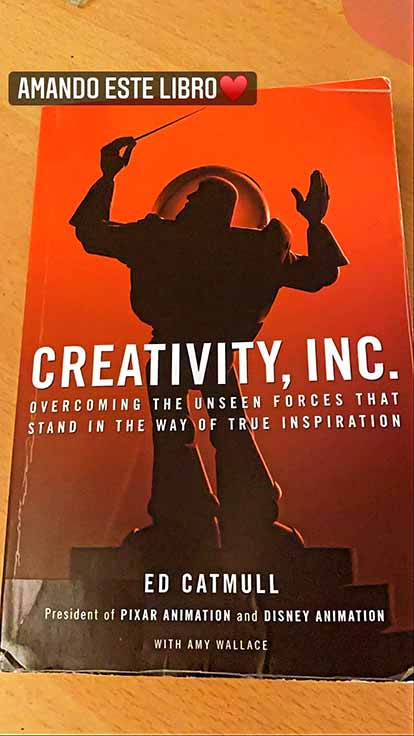
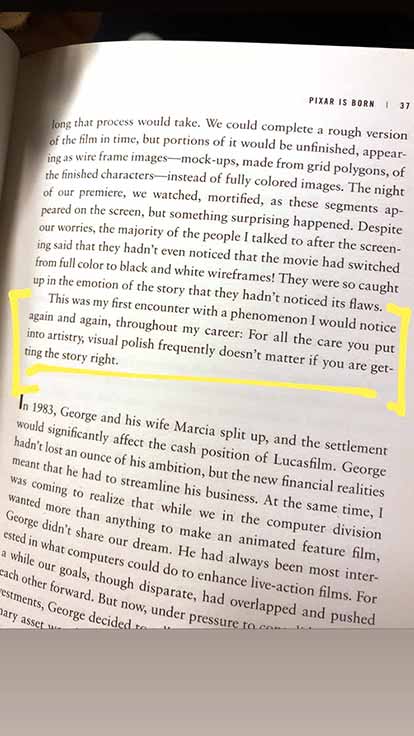
Creativity is an enabler to think and see differently, allowing us to answer the question, “How can we do it better, smarter and more productively?”.
Once we get more productive, we can continue delivering to our customers. In this process of finding more ways to be more productive meanwhile staying innovative, there are several opinions, sometimes conflict arises due to this pursuit. Still, there is also an awareness that the conflict of opinions and ideas can produce new oportunities.
Sometimes we expect new ideas to come in the rush of a meeting or when we demand ourselves to think out our brains out into it, but the truth is that it mostly happens during the exchange of information and opinions with others. “In the corridors, over lunch and even on the intranet lively discussions about new ideas occur”.
The article also talks about how Creativity is handled in organizations and suggests three levels of the hourglass: A. Creativity-stimulating climate, B. Creative thinking skills, C. Idea management.
It stands that a good creative climate, must be consolidated so people can come up with ideas before they get killed. It also refers to a study by Stern and Robinson, on the generation of valuable ideas that notes that it is impossible to predict where a golden idea will come from. Any member of the organization, even those not expected to bring any special ideas forward, can suddenly submit a precious suggestion. Therefore, by making assumptions about who might make a creative contribution, a company will limit its own creative potential.
Management must include anybody in the invitation to suggest new ideas. One of the examples given comes from a statement of an employee that stated: “My job was to select the best ideas and the best people from 300,000 employees. That is what a leader must do”.
“A rigid ‘this-is-how-we-do-it-here’ attitude can dominate in closed, conformist organizational cultures with tight, uniform norms and values, and considerable recruitment from within”.
When the culture of Creativity permeates the whole organization and cuts through hierarchical levels, the employees start to exchange in groups, and Cross-fertilization occurs spontaneously.
It is important to pay attention to how much time the organization is willing to spend to generate new ideas. Enough time would bring some rewards. “Precisely when our competitors have higher productivity, we need to free up time to answer creativity-stimulating questions like: How could we work more effectively or efficiently?”
Creativity allows us to look differently at matters like workflow, processes, and management styles. “At Coca-Cola, creativity is not an ‘epiphany du jour’. It is not something we propagate as the campaign of the month. It’s not just an invitation to a creativity facilitator. Creativity is what we put into practice 365 days a year.”
Then it becomes a discipline reflected in how one person interacts with another. It is in every step along the way how we approach and work with others.
In the creative sector, with organizations working on advertising, architecture, concepting and so on, Creativity is taken for granted. It is a way of living. So it is up to each organization to continuosly look for that “benevolent anarchism”, Where everyone is willing and allowed to express doubts and feeling about what they are doing and how they are doing it.
The reading also relates to how Creativity is being handled in governmental institutions and gives a glimpse of some opportunities to support creative processes in the Netherlands. One of them is that government could promote closer relations with the creative industries. Another one is to acknowledge those organizations that are doing well in terms of Creativity. Also, talk about inviting experts to boost some ideas to address challenges in the public and private sector.
The author gives an example of the city of Groningen, which has given their community several features to come with a great creative potential; involving people of diverse backgrounds, in education, in the cultural sector, and also innovative companies in ICT and life sciences sectors. Also stimulating creative thinking in teaching programs, such as “Learning to think creatively” in some Dutch schools.